


D'var Torah for Parashat Beha’alotcha 5786
- Rabbi Stephen Epstein

- May 28
- 4 min read
Parashat Beha’alotcha 5786 / פָּרָשַׁת בְּהַעֲלֹתְךָ
6 June 2026 / 21 Sivan 5786 (Diaspora)
Parashat Beha’alotcha is the 36th weekly Torah portion in the annual Jewish cycle of Torah reading.
This page displays the Diaspora Torah reading for Beha’alotcha 5786. The Israel schedule is used by Jews living in modern Israel.
Torah Portion: Numbers 8:1-12:16
Beha’alotekha (“When You Raise”) opens with God instructing Moses to inaugurate the Levites for service in the Mishkan (Tabernacle). It also recounts the stories of people who request a second chance to offer the Passover sacrifice, complaints of the Israelites and their punishments, and a disease that affects Miriam. [1]
Triennial year 1
N.B. the following is read in the Diaspora for 5786.See also Beha'alotcha 5786 Israel
Haftarah: Zechariah 2:14-4:7 · 21 p’sukim p. 620 - 622
Commentary and Divrei Torah Sefaria OU Torah Rabbi Sacks z”l Jewish Theological Seminary
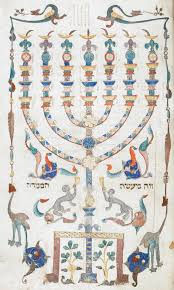
Actually, Beha’alotekha opens with the inauguration of the Menorah. At the end of the previous parashat, Nasso, all the tribes sent representatives to make donations to the Mishkan. They brought ladles, incense, and other materials.
Now we turn our focus to the Menorah. This is what provided light in the Mishkan. It was, however, more than that. With its seven branches, it portrayed the light as completion.
Just what is “light” or “fire”? Ever wonder? It’s not material–you can’t pick it up and hold it. You can try, but you’ll get burnt. Fire is energy. It is probably the most subtle level of the material universe that we can perceive.
Perhaps this is symbolic of Hashem. Not that we’re going to pray to it or revere fire as a god. But when we perceive fire and see its nature, we are reminded that while we can not and don’t perceive G-d in a material way, hence the term “ineffable”, we know spiritually that G-d exists and is acting subtly on our behalf. Thus the importance of the Menorah.
It is a reminder that Hashem is with us always, sustaining us and guiding/lighting our paths.
Parashat Beha’alotcha 5786 / פָּרָשַׁת בְּהַעֲלֹתְךָ
6 de junio de 2026 / 21 de Siván 5786 (Diáspora)
La Parashat Beha’alotcha es la 36.ª porción semanal de la Torá en el ciclo judío anual de lectura de la Torá.
Esta página muestra la lectura de la Torá para la Diáspora correspondiente a Beha’alotcha 5786. El calendario de Israel es utilizado por los judíos que residen en el Israel moderno.
Porción de la Torá: Números 8:1-12:16
Beha’alotcha («Cuando eleves») comienza con Dios instruyendo a Moisés para que inaugure a los levitas en el servicio del Mishkán (Tabernáculo). También relata las historias de personas que solicitan una segunda oportunidad para ofrecer el sacrificio de Pésaj, las quejas de los israelitas y sus castigos, y una enfermedad que afecta a Miriam. [1]
Año trienal 1
N.B.: lo siguiente se lee en la Diáspora para el año 5786.
Véase también Beha'alotcha 5786 Israel
1: 8:1-4 · 4 versículos p. 605
2: 8:5-9 · 5 versículos p. 606
3: 8:10-14 · 5 versículos p. 606
4: 8:15-22 · 8 versículos p. 606 - 607
5: 8:23-26 · 4 versículos p. 607 - 608
6: 9:1-8 · 8 versículos p. 608 - 609
7: 9:9-14 · 6 versículos p. 609
Maf: 12:14-16 · 3 versículos p. 619
Haftará: Zacarías 2:14-4:7 · 21 versículos p. 620 - 622
Comentarios y Divrei Torá | Sefaria | OU Torah | Rabino Sacks z”l | Jewish Theological Seminary
De hecho, la parashá Beha’alotekha comienza con la inauguración de la Menorá. Al final de la parashá anterior, Nasso, todas las tribus enviaron representantes para realizar donaciones al Mishkán. Trajeron cucharones, incienso y otros materiales.
Ahora centramos nuestra atención en la Menorá. Este era el elemento que proporcionaba luz en el Mishkán. Sin embargo, era mucho más que eso. Con sus siete brazos, representaba la luz como plenitud.
¿Qué es exactamente la «luz» o el «fuego»? ¿Alguna vez te lo has preguntado? No es algo material; no puedes tomarlo y sostenerlo en tus manos. Puedes intentarlo, pero te quemarás. El fuego es energía. Es, probablemente, el nivel más sutil del universo material que somos capaces de percibir.
Quizás esto sea un símbolo de Hashem. No en el sentido de que vayamos a rezarle o a venerar el fuego como a un dios; sino que, al percibir el fuego y contemplar su naturaleza, recordamos que —si bien no podemos percibir a Dios de manera material (de ahí el término «inefable») ni lo percibimos así— sabemos, en un plano espiritual, que Dios existe y que actúa sutilmente en nuestro favor. De ahí radica la importancia de la Menorá.
Es un recordatorio de que Hashem está siempre con nosotros, sosteniéndonos y guiando —iluminando— nuestros caminos.


Comments